
June 29, 2026 | Source: People’s Daily
Global cumulative installed capacity of novel energy storage has accounted for 56.2% of the power energy storage market, with continuously diversified technical routes and application scenarios.
Beyond Power Storage: Novel Energy Storage Reshapes the Future of Energy
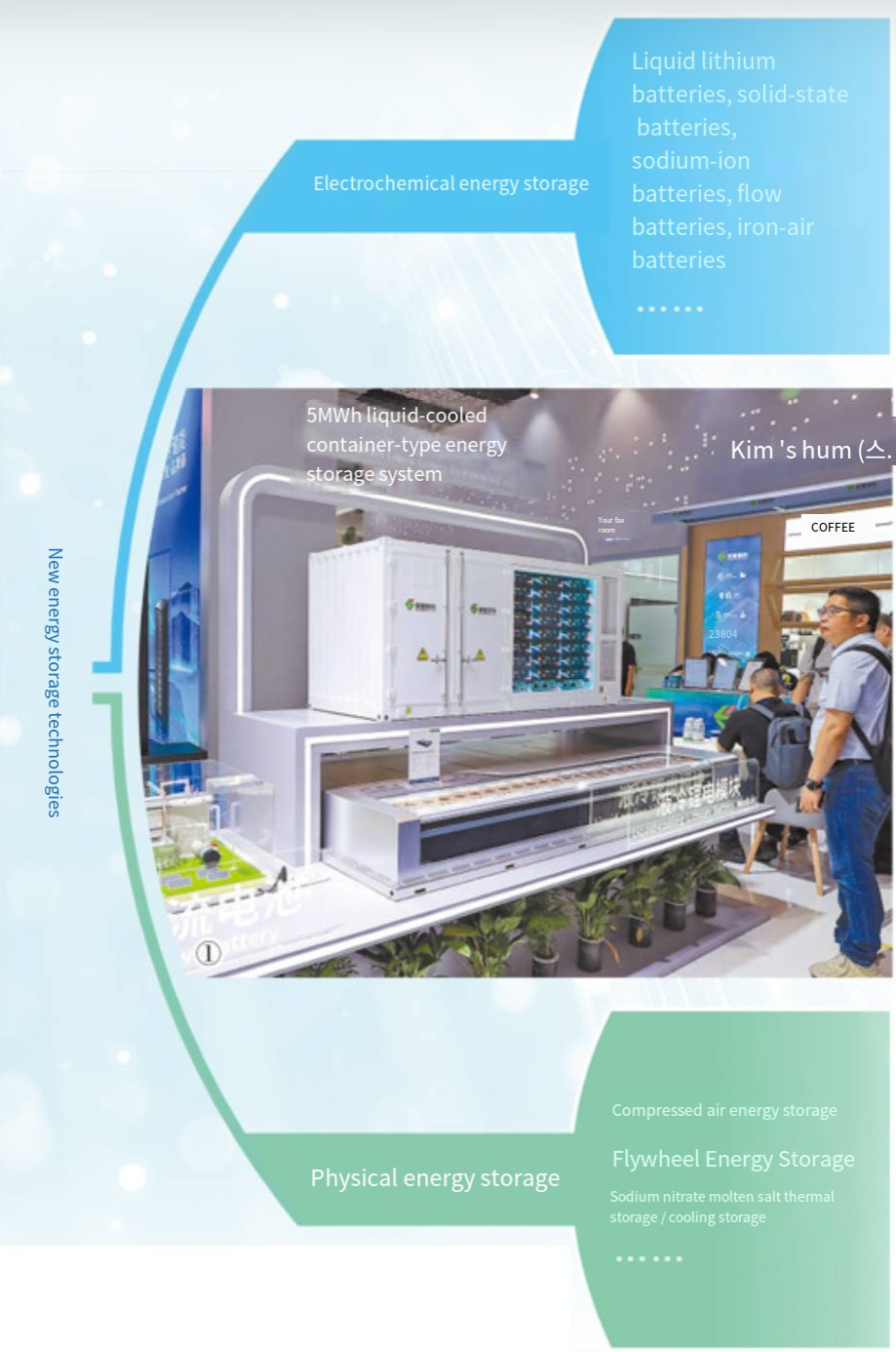
The photo showcases a liquid-cooled containerized energy storage system exhibited at the 19th (2026) International Solar Photovoltaic and Smart Energy Conference & Exhibition (SNEC) in Shanghai. Photo by Shi Hua (Image China)
Against the backdrop of deepening global energy transition, especially surging computing power demand driven by AI large model training, a boom in novel energy storage technologies targeting enhanced safety, longer service life and better cost efficiency is sweeping the industry. Statistics show that the world’s newly installed novel energy storage capacity exceeded 113.3 GW in 2025, with cumulative installed capacity taking up 56.2% of the global power storage market. It is projected that the total global energy storage installed capacity will hit 1,545 GW by 2034. The industry is shifting from a landscape dominated by liquid lithium-ion batteries to a new phase of multi-technology competition featuring coordinated development of diverse storage solutions, with expanding and enriched application scenarios.
From Single Lithium-Ion Route to Diversified Technology Matrix
Breakthroughs in global novel energy storage technologies are accelerating at present. For instance, a 200 MW/400 MWh novel electrochemical energy storage station has been completed and put into operation in Shanwei, Guangdong Province of China, marking a major leap forward in the large-scale commercialization of hybrid solid-liquid battery storage technology. This project has been listed among the Top 10 Scientific & Technological Innovation Achievements in the Energy Sector for 2025 by the National Energy Administration of China. In the U.S., Google has entered a strategic cooperation with Form Energy to deploy ultra-long-duration, high-safety iron-air batteries for data center power supply systems, delivering a new solution for the energy infrastructure under the AI era. Solid-state batteries are regarded as a core lever to reshape the future energy landscape in Japan, South Korea and the EU, where governments are ramping up policy incentives, capital investment and industrial chain collaboration to seize the high ground in this technology.
Energy storage serves as a core pillar for building a new power system, overturning the traditional model where power generation and consumption occur simultaneously. Conventional energy storage mainly refers to pumped hydro storage. Novel energy storage covers all power-output energy storage technologies excluding pumped hydro storage. Compared with pumped hydro storage, it features shorter construction cycles, flexible site selection, rapid response speed and strong regulation capacity, and can be deployed in a distributed manner on the generation side, grid side and user side to integrate deeply into all links of the power system.
Based on working principles, novel energy storage falls into two major categories: electrochemical energy storage and physical energy storage. Electrochemical storage stores and releases energy via internal chemical reactions of batteries, boasting fast response and flexible deployment. Physical storage captures energy through media such as compressed air, water and heat, better suited for large-scale, long-duration storage scenarios.
Over the past decade, liquid lithium-ion batteries have dominated the electrochemical storage market with high energy density and mature industrial chains, accounting for over 96% of all novel energy storage deployments. As practical demand expands rapidly, academia and industry now demand far more from storage technologies than merely storing electricity. Modern storage systems are expected to act as versatile all-rounders that satisfy complex power system requirements across safety, cost, raw material availability, lifespan and discharge duration. No single technology can fulfill all these multi-dimensional targets alone, necessitating a diversified technology matrix covering all time scales—from millisecond-level fast response to seasonal long-duration storage—and varied application needs.
Electrochemical & Physical Storage Technologies Each Have Unique Strengths
Electrochemical Energy Storage
Emerging alternatives including solid-state batteries, sodium-ion batteries, flow batteries and iron-air batteries are advancing rapidly, each with distinct technical merits.
- Solid-state batteries Solid-state batteries are hailed as the ideal storage technology and a core direction for next-generation high-performance batteries. Unlike conventional lithium-ion cells with liquid electrolytes, solid-state batteries adopt solid electrolytes for ion conduction, fundamentally eliminating risks of thermal runaway and fire hazards. When paired with lithium metal anodes, they can further lift energy density. Semi-solid (hybrid solid-liquid) lithium-ion energy storage batteries jointly developed by the Institute of Physics, Chinese Academy of Sciences and WeLion New Energy have achieved large-scale grid-level deployment, while full solid-state batteries are expected to launch commercialization around 2028. Toyota (Japan), Samsung (South Korea), Solid Power (U.S.) and other enterprises are speeding up R&D and mass production processes for solid-state batteries. Breakthroughs in material cost and manufacturing processes for solid-state batteries will profoundly reshape the landscape of large-scale energy storage and new energy vehicle industries.
- Sodium-ion batteries Sodium-ion batteries act as complementary solutions to lithium-ion cells. Sodium shares similar chemical properties with lithium yet boasts vastly more abundant and widely distributed reserves, earning it the moniker “low-cost resource”. Sodium-ion batteries maintain stable performance between -30℃ and 50℃, presenting huge potential for energy storage in frigid regions, grid peak regulation and communication base stations. The Institute of Physics, Chinese Academy of Sciences and HiNa Battery have jointly built mass production lines and delivered hundred-megawatt-hour sodium-ion storage demonstration systems. French firm Tiamat focuses on fast-charging sodium-ion batteries for transportation and energy storage markets.
- Flow batteries Commercialization of flow batteries has accelerated markedly in recent years. Unlike conventional batteries that store energy inside electrodes, flow batteries store energy in external electrolyte tanks, delivering ultra-long cycle life and superior safety, making them ideal for large-scale, long-duration storage. China has built and commissioned the world’s largest all-vanadium flow battery energy storage project—the Dalian Flow Battery Peak Shaving Power Station, with a phase-one capacity of 100 MW/400 MWh. The U.S. Department of Energy continues funding flow battery R&D and demonstration projects to advance long-duration storage technology. Australia and other nations are actively integrating flow batteries into energy storage facilities supporting new energy bases.
- Iron-air batteries Iron-air batteries rely on a reversible “rusting & de-rusting” reaction for energy storage. During discharge, the cell draws oxygen from air to oxidize iron metal; during charging, rust converts back to iron while oxygen is released. Conventional lithium-ion batteries generally deliver 2–10 hours of discharge, whereas iron-air batteries can discharge slowly for up to 100 hours. Iron, its core raw material, is low-cost and highly safe. Future breakthroughs hinge on electrode innovation and electrolyte optimization. The U.S. Department of Energy lists iron-air batteries as a key supported technology to provide multi-day power backup for power grids under extreme weather conditions.
Physical Energy Storage
Physical storage technologies also offer differentiated advantages:
- Compressed air energy storage: Stores surplus electricity by compressing air into underground caverns; stored air is released to drive generator units when power is needed.
- Flywheel energy storage: Captures kinetic energy via high-speed rotating flywheels, featuring instant high-power output.
- Molten salt thermal/cold storage: Regulates energy through thermal storage.
China’s independently developed advanced compressed air energy storage systems keep setting new records for single-unit power capacity. The U.S. and Europe are actively exploring adiabatic compressed air storage solutions coordinated with wind and photovoltaic power.
A differentiated division of labor is taking shape across all storage technologies:
- Short-term frequency regulation (within 30 minutes): Flywheels, supercapacitors and high-power lithium-ion batteries prevail.
- Medium-short duration storage (within 10 hours): Lithium-ion batteries dominate, with upgrades toward safer hybrid solid-liquid and all-solid-state variants; resource-unconstrained sodium-ion storage is also expanding rapidly.
- Long-duration storage for power generation and grid sides: Jointly supported by flow batteries, compressed air storage, iron-air batteries and molten salt thermal/cold storage.
Complementary and coordinated multi-technology routes deliver comprehensive technical safeguards for building a new power system.
Accelerating Toward Large-Scale Commercialization
With maturing technologies, novel energy storage is evolving from demonstration projects to mass deployment, integrated into power systems, industrial production, digital economy and numerous other sectors. New energy power generation remains its primary application scenario: storage captures surplus renewable power and releases it during peak consumption to achieve peak shaving and valley filling, laying critical support for high-proportion renewable grid integration.
AI has become a new growth driver for energy storage demand. Skyrocketing power consumption from large model training and AI computing centers has prompted tech giants including Google, Microsoft, Meta and Amazon to invest heavily in long-duration energy storage projects, establishing novel storage as a fundamental infrastructure supporting the AI era. Meanwhile, novel storage systems are rapidly deployed in industrial parks, zero-carbon campuses, green buildings and off-grid microgrids, helping enterprises optimize power consumption structures, boost energy self-sufficiency and cut fossil fuel reliance.
AI is deeply embedded across the full lifecycle of energy storage R&D, manufacturing and operation:
- R&D phase: AI rapidly screens and predicts the performance of new materials, shortening battery research cycles.
- Production phase: Digital twins and machine vision advance intelligent, unmanned battery manufacturing.
- Operation phase: AI monitors equipment conditions in real time, predicts capacity degradation and safety risks, and dynamically optimizes charge-discharge strategies based on weather, power load and electricity price fluctuations.
From lab technical breakthroughs to critical infrastructure sustaining renewable grids, AI computing hubs and zero-carbon campuses, novel energy storage is scaling up at an accelerated pace. Multiple challenges remain to be addressed in the short and long term: Technically, core targets of safety, long cycle life and low cost are yet to be fully realized. Industrially, further improvements are required in key material supply chains, equipment manufacturing, recycling systems, market regulations and technical standard frameworks.
As diversified technical routes mature, a more flexible, efficient and low-carbon energy system will gradually take shape, writing a brand-new chapter for humanity’s energy revolution.
(Author: Researcher at the Institute of Physics, Chinese Academy of Sciences; Professor Chen Wei from the University of Science and Technology of China also contributed to this article)
Editor-in-Charge